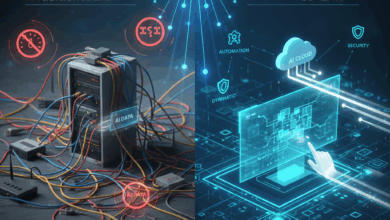
Why Retail Stores Need Wi-Fi Digital Experience Monitoring
DEM For Users and Guest Wi-Fi

Retail Stores Need Wi-Fi Digital Experience Monitoring.
Walk into any modern retail store and you will notice how deeply technology has become woven into the shopping experience.
From mobile point-of-sale systems (PoS) to digital signage, from customer loyalty apps to in-store navigation, Wi-Fi has become the invisible backbone that keeps everything running.
Yet for many retailers, the quality of that Wi-Fi experience is still treated as an afterthought.
The assumption is that if the network is up, it is good enough. In reality, the customer’s digital experience depends on far more than simple connectivity. This is where digital experience monitoring (DEM) comes in, and why it is becoming a necessity for retail environments.
Immersive Retail Environments
Retail is no longer just about shelves and cash registers. It is about creating an immersive environment where customers can browse, compare, and purchase seamlessly.
Wi-Fi plays a central role in enabling this. Shoppers expect to connect instantly to store networks, whether to access promotions, check product reviews, or use mobile payment systems.
Employees rely on Wi-Fi to process transactions, manage inventory, and communicate across departments. When the network falters, the impact is immediate.
Transactions slow down, customers grow frustrated, and staff are left scrambling. What makes this more challenging is that traditional network monitoring tools often fail to capture the actual experience of the end user.
They may show that the network is technically available, but they do not reveal whether customers are struggling with slow load times, dropped connections, or inconsistent performance.
Infrastructure to Experience Metrics
Digital experience monitoring changes the equation by shifting the focus from infrastructure metrics to user experience. Instead of simply tracking uptime or bandwidth, it measures how applications and services perform from the perspective of the people using them.
In a retail store, this means understanding whether a customer can quickly connect to Wi-Fi, whether their loyalty app loads smoothly, and whether digital payment systems respond without delay.
It also means giving store managers visibility into how employees are experiencing the tools they depend on.
By capturing this data in real time, retailers can identify problems before they escalate, ensuring that both customers and staff enjoy a seamless digital journey.
The need for this kind of monitoring is amplified by the growing complexity of retail networks. Stores are no longer dealing with a handful of devices. They are managing hundreds, sometimes thousands, of connections across smartphones, tablets, point-of-sale terminals, cameras, sensors, and digital displays.
Each of these devices places demands on the Wi-Fi network, and each contributes to the overall experience. A single misconfigured access point or overloaded segment can ripple across the store, degrading performance for everyone.
Without digital experience monitoring, these issues often go unnoticed until they cause visible disruption. By then, the damage is done: customers may abandon purchases, employees may lose valuable time, and the brand reputation may suffer.
Omnichnnel Retail Consistency
Another factor driving the need for digital experience monitoring is the rise of omnichannel retail.
Customers expect a consistent experience whether they are shopping online, using a mobile app, or visiting a physical store. In many cases, the physical store is an extension of the digital journey.
Shoppers may research products online, then visit the store to see them in person, and finally complete the purchase through a mobile checkout.
If the in-store Wi-Fi fails to support this journey, the entire experience breaks down.
Digital experience monitoring ensures that the physical store remains aligned with the digital channels, providing continuity and reliability across touchpoints.
Security is also intertwined with experience
Retail Wi-Fi networks are frequent targets for cyberattacks, and poor performance can sometimes be a symptom of malicious activity.
Digital experience monitoring helps detect anomalies that traditional tools might miss. For example, if customers suddenly experience unusual delays when accessing certain services, it could indicate a security breach or unauthorized activity.
By correlating performance data with security insights, retailers can respond faster and protect both their customers and their brand.
The business case for digital experience monitoring is compelling. Consider the cost of a single failed transaction. If a customer attempts to pay through a mobile system and the connection drops, they may abandon the purchase altogether.
Multiply that across dozens of customers in a busy store, and the revenue loss becomes significant. Add to that the reputational damage of frustrated shoppers sharing their negative experiences online, and the impact grows.
On the employee side, slow or unreliable systems reduce productivity, increase stress, and erode morale. By investing in digital experience monitoring, retailers can minimize these risks, protect revenue, and enhance customer satisfaction.
It’s a Strategic Capability
It is important to recognise that digital experience monitoring is not just a technical tool. It is a strategic capability.
It provides insights that inform decision-making across the business.
Store managers can use the data to adjust staffing or prioritise support.
IT teams can identify patterns and optimise network design.
Marketing teams can better understand how customers engage with digital promotions in-store.
Executives can gain confidence that investments in digital transformation are delivering the intended results. In this way, digital experience monitoring becomes a bridge between technology and business outcomes.
Retailers who embrace this approach position themselves to thrive in a competitive landscape.
Customers increasingly choose where to shop based not only on product selection and price but also on convenience and experience.
A store that offers fast, reliable Wi-Fi and seamless digital interactions gains an edge over one that does not.
As more transactions move to mobile and more services depend on connectivity, the gap will only widen. Digital experience monitoring ensures that retailers stay ahead of expectations, delivering the kind of frictionless experience that keeps customers coming back.
Key Tools for Wi-Fi DEM
What tools or platforms can you deploy for Wi-Fi DEM?
There are several approaches you can take. Here’s a few popular options to explore.
Aruba UXI
Aruba UXI deploys small sensors in-store that simulate user activity. These sensors run synthetic tests around the clock, more than 20,000 per day, covering Wi-Fi connectivity, roaming, voice quality, and application performance. When problems are detected, UXI automatically triages them, replicates the issue across wired and wireless networks, and surfaces root-cause analysis in a cloud dashboard.
Cisco ThousandEyes
ThousandEyes is widely used for end-to-end visibility across networks, cloud infrastructure, and APIs. For retail, it helps assure the performance of customer-facing systems like POS terminals, loyalty apps, and e-commerce platforms. It can emulate transactions to test user journeys, monitor VPN gateways and Wi-Fi systems, and detect anomalies such as BGP hijacks or DDoS attacks that could disrupt store operations.
7SIGNAL
7SIGNAL focuses specifically on wireless experience monitoring. It continuously measures Wi-Fi performance from the perspective of connected devices, such as handheld sales terminals, tablets, and inventory scanners. By proactively identifying connection issues before they impact users, 7SIGNAL ensures that retail staff and customers remain connected. This is particularly valuable for preventing downtime in sales transactions and inventory management systems.
Hughes Smart Wi-Fi
Hughes offers a cloud-based retail Wi-Fi and analytics solution. Beyond connectivity, it captures customer demographics and behavior, such as arrival times and length of visits, and integrates this data into CRM systems. This allows retailers to combine network monitoring with marketing insights, turning Wi-Fi into both a performance tool and a customer engagement channel
Wi-Fi Front and Centre
Wi-Fi is no longer a background utility in retail stores. It is a critical enabler of both customer engagement and operational efficiency. Treating it as such requires more than traditional monitoring.
It requires a focus on the actual digital experience of the people who depend on it.
Digital experience monitoring provides that focus, offering real-time visibility, actionable insights, and the ability to align technology with business goals.
For retailers, the choice is clear: invest in digital experience monitoring now, or risk falling behind in a marketplace where experience is everything.
The stores that succeed will be those that recognize that every digital interaction matters, and that the quality of those interactions depends on more than just connectivity.
It depends on the ability to see, measure, and improve the experience itself.